

EXPLORING FEMALE PATTERN HAIR LOSS AND YOUR OPTIONS FOR FULLER HAIR.
A parting that looks wider, a crown that feels less full, or more scalp showing when styling: female pattern hair loss often begins quietly. The changes develop gradually, but recognising them early lets you explore treatments that can preserve fullness and support growth.
What happens beneath the scalp?
Female pattern hair loss occurs as hair follicles gradually shrink, a process called miniaturisation. The growing phase shortens, and each new cycle produces finer, shorter strands, gradually reducing the hair’s overall fullness.
Thinning usually affects the top and centre of the scalp and may also involve the temples, while the central front hairline is often preserved. Rather than forming distinct bald patches, thinning is spread across these areas, and complete baldness is uncommon. The condition itself does not usually cause itching, pain or redness. If these symptoms occur, they should be assessed separately.
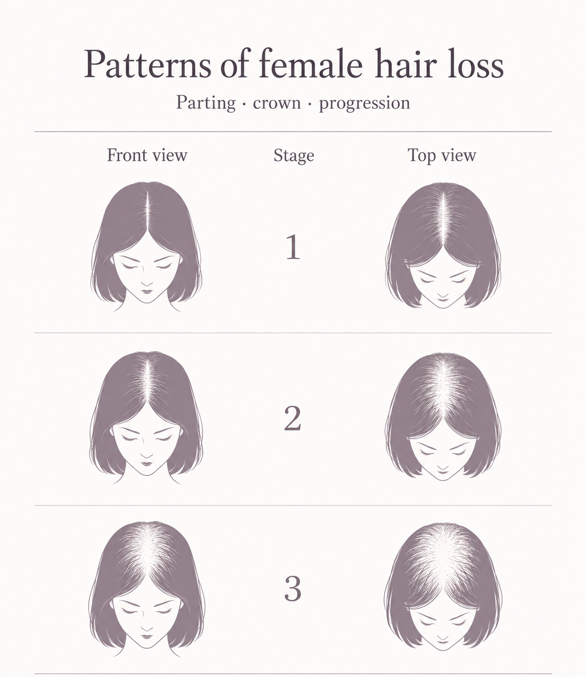
The influence of genes and hormones
Inherited susceptibility plays an important role, with genes from either side of the family contributing. Female pattern hair loss can begin after puberty, although it becomes more common with age, particularly around and after menopause.
Female pattern hair loss involves both genetic and hormonal influences. Some hair follicles are more sensitive to androgens, so thinning can occur even when these hormone levels are normal.
Where hair changes occur alongside irregular periods, persistent acne or increased facial hair, your GP may investigate conditions such as polycystic ovary syndrome.
Telogen effluvium is a temporary disruption of the hair cycle that can follow triggers such as illness, stress, nutritional deficiencies or hormonal changes, including those after childbirth. It can coexist with female pattern hair loss and make existing thinning more noticeable.
Finding an approach that works
An assessment helps distinguish pattern hair loss from temporary shedding, nutritional deficiencies, or thyroid-related changes that can sometimes occur alongside it. A trichologist can assess your hair and scalp and recommend medical investigation where appropriate.
Topical minoxidil can help slow progression and improve density. Available over the counter, it requires consistent use for several months, and continued treatment is needed to maintain benefits. Potential side effects include temporary initial shedding, scalp irritation and unwanted facial hair. Avoid use during pregnancy and breastfeeding, and read the product leaflet before use.
Prescription treatments, including spironolactone or low-dose oral minoxidil, may suit some women following medical assessment. Hair transplantation can also be considered in selected cases where suitable donor hair remains.
Finasteride may also be prescribed off-label for some postmenopausal women, following an assessment of its suitability and potential side effects.
Supporting fullness day to day
Haircuts: A considered shape and blunt ends can make finer hair look fuller, while regular trims help limit split ends and breakage.
Volumising products: Lightweight mousses, root-lifting sprays and texturising powders can add body without weighing strands down.
PRP: Platelet-rich plasma treatment uses injections prepared from your own blood and may improve density, although results vary and evidence is still developing.
Low-level light therapy: Devices that deliver low-level red light may support growth and delivery of oxygen and nutrients to the follicles, but require consistent use.
Scalp micropigmentation: Tiny pigment dots tattooed onto the scalp can reduce the contrast between hair and skin, making thinning less noticeable.
Balanced nutrition: Regular, varied meals with macro- and micronutrient groups support normal hair growth, while supplements are most useful when an identified deficiency needs correcting.
Restful sleep: A consistent bedtime and a calming evening routine can support rest and overall wellbeing.
Stress management: Movement, enjoyable activities and time to unwind can help manage stress, which may otherwise contribute to additional shedding.


© 2026 The Hair Consultancy